For Thursday (2/26)

For Thursday, let’s do the following:

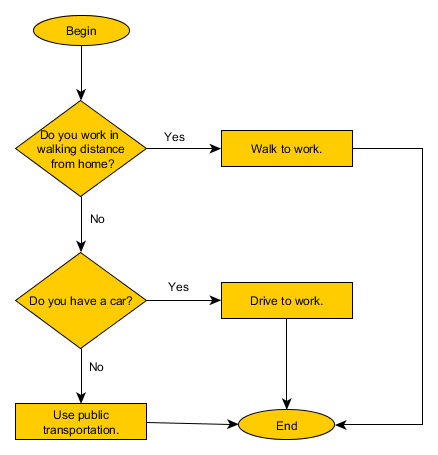
  1. The “tree” group will tell us about Moretti’s use of trees and other arboreal representations;
  2. We’ll have an in-class lab session to catch up on any WordPress/domain issues, including installing the hypothes.is plugin I talked about in class on Tuesday. Bring any questions or concerns about anything-Wordpress to class;
  3. And, we’ll use the lab to start working through Miriam Posner’s tutorial on Palladio, a powerful tool for visualizing “big data” and distant reading.  Be sure to read through the tutorial before class so we can jump right into working with Palladio.
Posted in Uncategorized | Leave a comment

For Tuesday (2/23)

Friends, sorry about the Thursday no-show (due to a medical situation).  Let’s try to get back on track for Tuesday.

We’ll discuss the Moretti essays.  (Remember, you’ve been assigned to a reading group, so you only have to read one of the three essays.  Also recall: if you missed class on Tuesday, you are a free agent and can select the essay of your choice.)  Don’t forget to blog your response to your reading.

And, let’s get started with Palladio, a very sophisticated, flexible tool for visualizing big data.  Take a look at Miriam Posner’s tutorial on Palladio.  She will walk you through the whole process, including a sample data set.  For now, just read the tutorial.  We’ll cook up her recipe together in class.

Enjoy the weekend!

Posted in Uncategorized | Leave a comment

For Thursday (2/18)

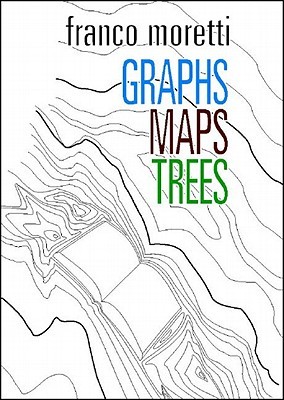
We’ve tweaked the syllabus a bit.  For Thursday, we’ll be reading three chapters/essays by Franco Moretti, pieces that develop the notion of “distant reading.”   In class, we divided into three reading groups.  Recall which group you belong to: maps, graphs, or trees.  Read the essay for that group.

Be sure to blog about your Moretti essay.  Try to answer these questions:  what benefits do you see to maps/trees/graphs? what drawbacks do you see to maps/trees/graphs?

Enjoy!

Posted in Uncategorized | 3 Comments

Text analysis (2/11)

For Thursday, let’s experiment with some text analysis.

First, let’s start with Tillie Lerner’s “The Iron Throat.” And, let’s begin with a  preliminary question:  how should we prepare the text for analysis? (See paragraphs 15 and 16 in Hoover’s essay for some suggestions.)   Once, you’ve gotten the text into shape for analysis use Voyant to start analyzing Lerner’s story.  With Voyant, you’ll still need to make some decisions about what kind of criteria you want to apply to the text.  Here’s a brief tutorial on starting with Voyant and using its various tools.

After playing around with Voyant, can you formulate some interesting critical questions about “The Iron Throat” inspired by your textual analysis?  Can you imagine the kinds of questions that Voyant might help you to answer?  What does the practice of algorithmic criticism feel like?  Blog your responses to these questions.

Second, find another text that interests you and that is available electronically.  (Again, see Hoover’s essay for some sources for electronic versions of texts.  If you have trouble tracking one down, let me know.)  For textual analysis purposes, higher word count is probably more useful.  (E.g. instead of selecting one poem, try a whole poetry collection.)

Once you’ve found an electronic/digital version of this text, ask yourself if you need to prepare it for textual analysis, as you did with Lerner’s story.  If it does require some editing work, start preparing the text.

Bring this analysis-ready (or near-ready) text to class, e.g. save it to your computer, save it on some kind of media, save it to the cloud, etc.

After briefly reviewing our “Voyanticizing” of the Lerner story, you’ll work on your text during class.

Posted in Uncategorized | Leave a comment

For Tuesday (Feb. 9)

For this Tuesday, you’ll want to make sure you do the following:

  1. Read Stephen Ramsay’s essay, “Algorithmic Criticism“
  2. If your last name begins with any letter between A and M, read David Hoover’s essay, “Textual Analysis“
  3. If your last name begins with any letter between N and Z, read Tanya Clement’s essay, “Textual Analysis, Data Mining, and Visualizations in Literary Scholarship“
  4. Create your first class-related blog post.  To do this: 1) read the Ramsay essay; 2) in your WordPress blog, create a new post; 3) explain one of Ramsay’s main ideas; 4) offer some commentary or response to this main idea.
Posted in Uncategorized | Leave a comment

For Thursday (2/4)

via GIPHY

Some things we’ll do in class on Thursday (2/4):

  1. Discuss a couple of brief definitions of data in the humanities (see syllabus)
  2. View and discuss the history of the printed page as interface
  3. Hold a mini coaching session on the ins and outs of WordPress (here are a couple of good, short tutorials on using WordPress: at WordPress.org and at Connected Courses)

If you think you might relate to your iPhone/smartphone like you would to a chihuahua, here’s a link to Ian Bogost’s The Geek’s Chihuahua.

If you’re interested in thinking about the codex book and print page as technologies, here’s one of my favorite investigations of paper as an enduring technology.

A domain is born!  If you have any questions or issues about your new domain, let me know.


Posted in Uncategorized | Leave a comment

For Tuesday (2/2)

DOO

Here are some things you’ll want to prepare for our class on Tuesday:

  1.  Bring a credit/debit/etc. card so that you can purchase your domain and server space and begin creating a domain of your own!
  2. Though it might lack some context until our class Tuesday, you can browse through this intro to creating and managing your own domain.  The one practical thing you can do before Tuesday is to think a little about what you want to name your domain, e.g. jsmith.net, rjones.org, inarhymingtime.com, etc.
  3. Take a look at Tillie Lerner’s short story, “The Iron Throat.” This will be the “guinea pig” text for our collective Digital Humanities (DH) efforts.  Give it a read.

Don’t forget – – you can always check what’s on deck for our next class by looking at the online syllabus.  Questions?  Let me know.

Posted in Uncategorized | Leave a comment

Welcome!

Welcome to Introduction to Digital Humanities (English 495).

This is our course motherblog – – your central headquarters for information about the class – –  readings and projects, assignments, helpful explanations, etc.  Note, for instance, the link in the right column to our course syllabus.

As you begin your own blogs, you’ll see your posts appear here in our motherblog.

Add this site to your favorites or bookmarks.

Posted in Uncategorized | Leave a comment