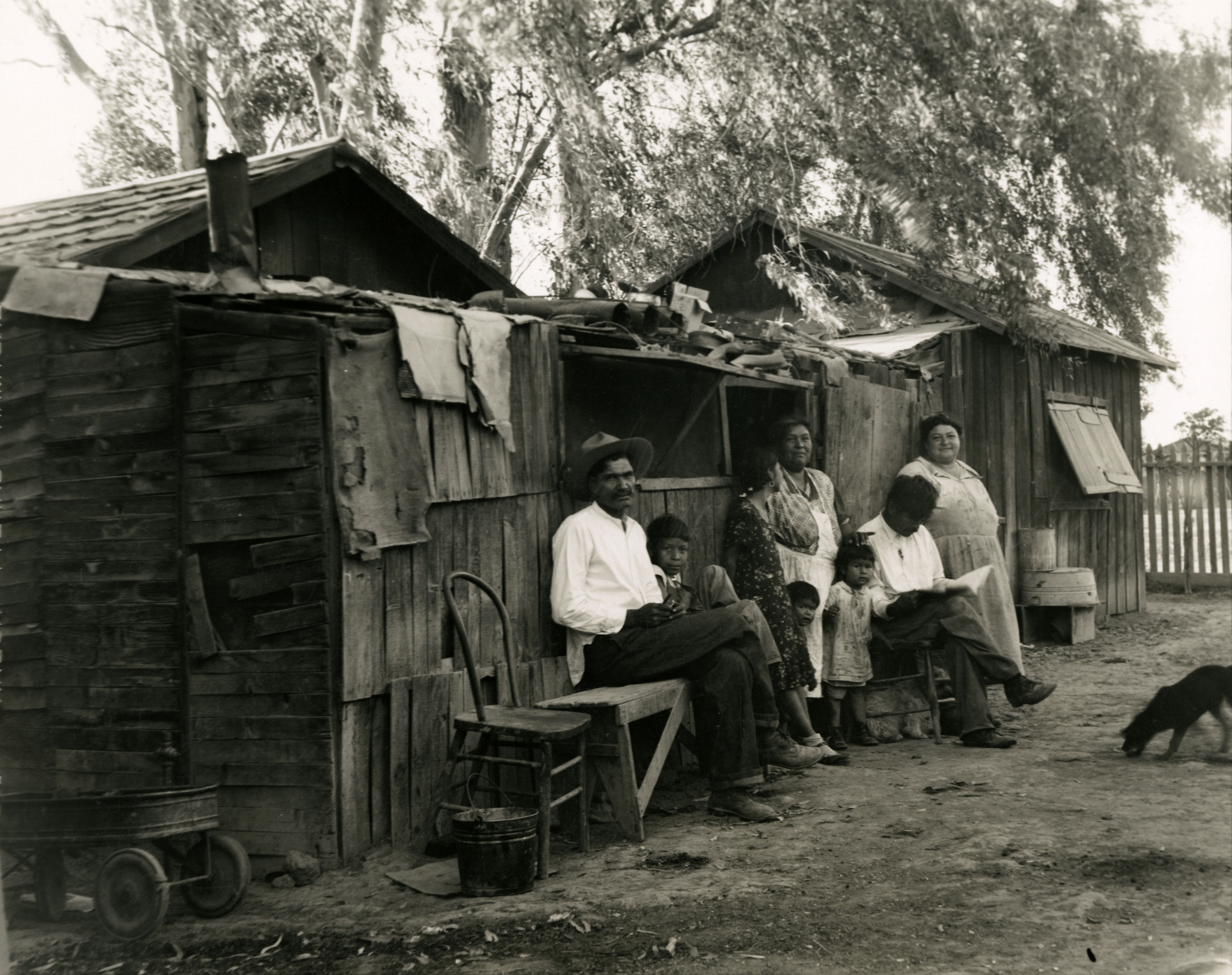
For Monday, let’s finish our discussion of Tortilla Flat.
Two things:
Think about this quotation from a recent teacher’s guide to Tortilla Flat: “While readers may freely snicker over the great cunning through which the characters in the novel manage to get their hands on alcohol, there is a disturbing current of alcoholism underneath the hilarious episodes of thievery and chicanery. . . .So, while there is much to laugh at in Tortilla Flat, which has often been praised for its comedic value, the novel also portrays shiftless alcoholics whose dysfunctional lives seems unlikely to last.”
Take a look at this Dorothea Lange photograph of a San Francisco breadline in the 1930s. What kind of relationship might it have to Tortilla Flat?
For Wed., let’s finish reading Tortilla Flat. And, don’t forget the excerpt that I asked you to analyze. Circle any and all phrases/words that contribute to setting, characterization, and the narrator/narration. Label them. Bring the analysis you did for “The Chrysanthemums,” so we can start comparing Steinbeck’s narrative style.
Let’s read through Chapter 10 in Tortilla Flat. As you read: 1) find a really good example of direct definition of character; 2) find two glaring examples of the covertness of our narrator.
Posted inUncategorized|Comments Off on For Monday (1/6)
Let’s start digging into Tortilla Flat – – with a focus on the preface and first four chapters. As you read Steinbeck’s preface, keep an eye on characterization and setting. Do you notice any significant shifts in technique? We’ll also want to talk about the narrator – – especially “his” relation to the characters and story he tells.
For Monday, complete your formalist analysis of the excerpt from Steinbeck’s “The Chrysanthemums.” (I passed the excerpts out in class. Focus on the first, shorter one.) You should circle every word or phrase in the excerpt that relates to setting and characterization. As you circle these words and/or phrase, label each one according to our rubric. E.g. “characterization: <trait>: indirect definition: action” or “setting: scope:social:narrow,” etc.
And, read the first four chapters of Steinbeck’s Tortilla Flat.
Read Steinbeck’s short story, “The Chrysanthemums.” And, take a look at our formalist/structuralist rubric for analyzing narrative fiction. What do you make of the gift exchange at the center of the plot? Can you identify the significant settings in the story? How do these settings relate to each other?
Posted inUncategorized|Comments Off on For Wed. (January 25)
Welcome to English 690:Steinbeck. We’re going to spend the semester reading, thinking, and writing about John Steinbeck. Steinbeck’s work occupies a strangely ambivalent position in modern American letters: though his novels are frequently encountered in high school classrooms, academic critics and scholars have relatively little to say about him. Some academics find his aesthetic too simple or his vision too sentimental. Others get nervous because he was and remains such a popular writer. In this class, we’ll explore the richness of Steinbeck’s fiction, especially how the 1930s and its radical currents transformed a young, Bohemian writer into a major voice in American culture, a voice that continues to inspire and speak to the contemporary moment.
Here on our coursesite, you’ll find regular updates about the class, a copy of the syllabus and other information, as well as miscellaneous texts and treats. Check back frequently.