For Tuesday (5/2)

For Tuesday, let’s talk about Jeff VanderMeer’s novella, The Strange Bird.  This is a shortish text that belongs to VanderMeer’s “Borne” trilogy (Borne, The Strange Bird, Dead Astronauts) – – no, not the “Bourne” series made famous by Matt Damon et al.  Though the setting is quite strange – – and radically “post-apocalyptic” – – the story is almost classical in its themes and structure.  You might also be reminded of Atwood’s “pigoons” and “wolvogs” etc.

For Thursday (4/20) and Tuesday (4/25)

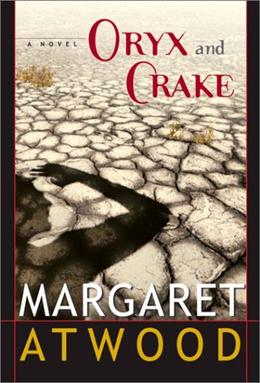
For Tuesday (4/25), finish reading Margaret Atwood’s Oryx and Crake.

For Thursday (4/20), let’s think about Atwood’s vision of “pre-apocalyptic” society.  In Oryx and Crake, this society is divided into “Compounds” and “Pleeblands.”  Can you see any evidence of a similar social organization/division in contemporary society? If so, how well does Atwood’s description of Compounds vs. Pleeblands correspond to ours?  For instance, in terms of who lives where? Or, the proffered reasons for why space/life is divided this way?  And, the pitfalls of this kind of social/geographic division?  Write about 500 words or so on this topic in your google writing space.  (Try to finish this up by Sunday at noon.)

For Thursday (4/13) and Tuesday (4/18)

For Tuesday, April 18, let’s try to read about half of Margaret Atwood’s fantastic novel – – Oryx and Crake – – up to about the end of Chapter 7.  (This is the first installment in her “MaddAddam” trilogy – – Oryx and Crake (2003), The Year of the Flood (2009), MaddAddam (2013).

For Thursday, after you’ve sampled some of Atwood’s novel, I’m curious which of our previous novels/films you think this new one most resembles.  Write three  paragraphs or so (about 500 words) in your google doc/reading journal reflecting on the relation between Oryx and Crake and its nearest relative (on the syllabus). (Try to finish this up by sundown on Sunday night.)

For Thursday (4/6) and Tuesday (4/11)

For Tuesday (4/11), let’s finish talking about Station Eleven.  And: As you finish the novel, reflect on the Traveling Symphony’s motto: “Survival Is Insufficient.”  What role does this motto play in Emily St. John Mandel’s novel? Which of the novels (or movies) we’ve read (or seen) so far would most disagree with the Traveling Symphony’s post-apocalyptic slogan?  Write a couple of paragraphs addressing these questions in your google journal.

For Thursday (4/6): Don’t forget – – your second Reflection Essay (“Last Days“) is due today by midnight!  Remember: just append it to your existing google doc.